
El Nido is a coastal area in the northern part of Palawan Island in the Philippines. Limestone formations, shallow waters, and groups of islands are all things that the area is known for. The way the land and sea are arranged makes them one system. El Nido, Philippines, is valuable because of its natural organization, stable ecosystems, and limited urban growth, not because of human design.
Location and structure of the coast
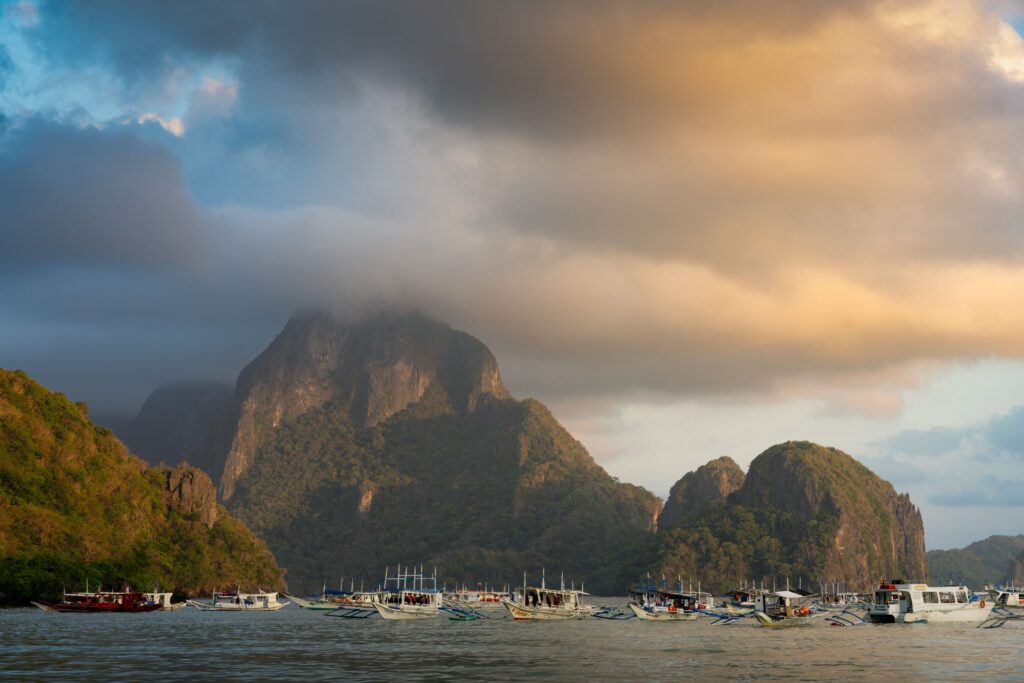
El Nido, Philippines, is on a bay that is protected and surrounded by limestone cliffs. There are small beaches, coves, and rocky edges along the coast. Islands off the coast act as a natural barrier that lessens the force of strong waves.
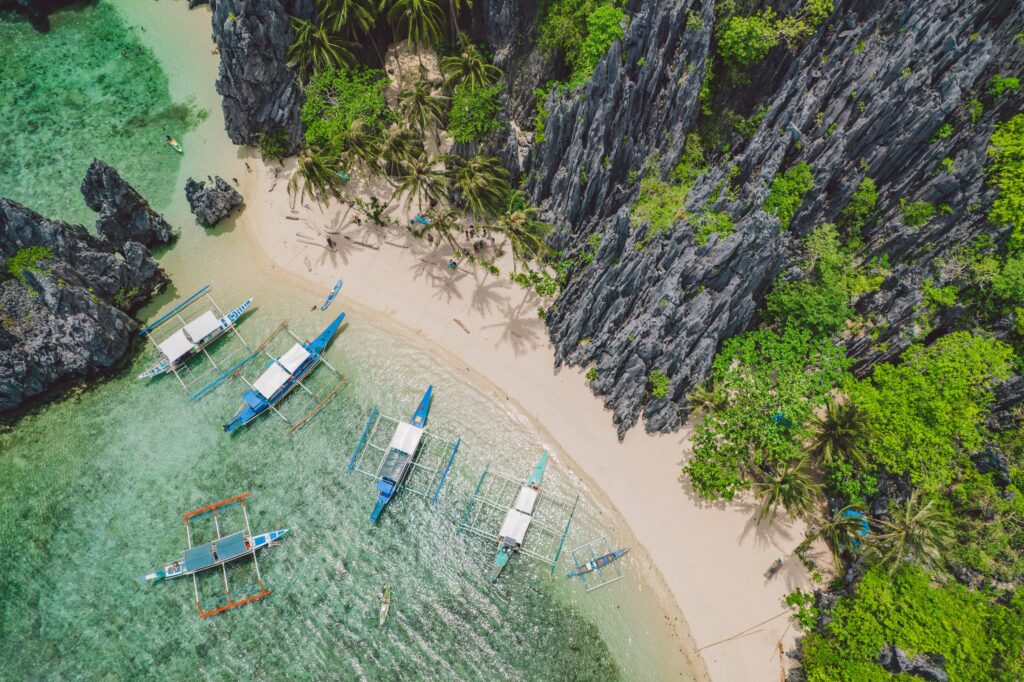
The landscape is mostly made up of karst formations. The sea meets the limestone cliffs directly. There are caves, overhangs, and hidden lagoons in these formations. Water and wind have shaped the patterns of erosion on rock surfaces.
The water gets deeper quickly near the shore. Coral grows in shallow areas. Water can flow through deeper channels. This structure helps keep the water clear and supports a wide range of marine life.
Mangroves grow in areas that are protected. They protect coasts from erosion and give fish places to make babies. Sand in different places can be different, like small white grains or pieces of coral.
Influence of the Weather and the Sea
El Nido, Philippines, has a tropical climate. The weather stays warm all year. Monsoon systems affect rainfall patterns, which change with the seasons.
When it’s dry, the seas are calm and you can see a long way. When it rains, the air gets more humid and the clouds get thicker. Most of the time, rain comes in short bursts instead of long storms.
The temperature of the water stays the same. This helps coral systems and fish populations. In shallow reef areas, sunlight can get through and photosynthesis can happen.
The weather changes every day based on the wind direction. Some bays stay calm, while others get more wind. This change makes small ecosystems along the coast.
Marine Ecosystems and Biodiversity
Coral reefs, fish, and invertebrates are all part of the marine life in El Nido, Philippines. Reefs grow near the shore and at the base of islands. Coral structures come in different shapes and sizes.
There are seagrass beds in shallow areas. These places are good for turtles and small fish. They also keep sediment in place and make the water clearer.
There are different kinds of fish, such as reef species and migratory populations. The presence of predators shows that the ecosystem is in balance. Fishing by people is limited and controlled.
Changes in temperature and physical damage can have a big effect on marine ecosystems. Natural barriers help keep things from getting worse from outside. You can see how healthy the reef is when the water is clear.
Some important marine features are:
- Coral reefs that are not very deep near islands
- Seagrass beds that help coastal species
- Water that is clear and has a steady temperature
- Island clusters protect against waves naturally
People Living and Using the Coast
In El Nido, Philippines, people mostly live in certain areas. Villages are not near sensitive reef areas. The density of buildings stays moderate.
Wood, concrete, and metal roofing are all materials used to build things. The height of buildings is limited. Instead of changing the land, structures follow the shape of the coastline.
Fishing is still a part of the local economy. Methods are old–fashioned and small–scale. Boats are made to be used in shallow water.
There is tourism, but it is regulated. Activity is limited to certain routes and areas. People who are sensitive to certain areas can’t get in. This method eases stress on ecosystems.
Visual Traits and Balance in the Landscape
Contrast gives El Nido, Philippines, its unique look. The water is bright, but the cliffs are dark limestone. Vegetation doesn’t cover rock faces evenly.
The color of the water changes depending on how deep it is and how much light it gets. The shallow areas look turquoise. In deeper areas, the blue tones are darker. This change makes it easier to see depth.
Islands don’t have a regular shape. No two formations look the same. This irregularity stops things from repeating visually.
Human structures are still not the most important things to see. Natural shapes are the most common things to see from land and sea. The lack of tall buildings keeps the horizon lines clear.