
There are many areas in China that have strong visual identities. The landscape balance and long history of people living in harmony with nature in one southern area make it one of the most beautiful places in China. The area is made up of limestone mountains, rivers, and traditional villages that all work together to make a stable geographic system. It has value because of its structure, not its decorations, and because it has been around for a long time, not because it is new.
Natural Forms and Geographic Structure
Karst geology makes the most beautiful place in China. From flat river valleys, limestone mountains rise sharply. These mountains make both narrow corridors and wide basins. The land is bumpy, but it’s organized. Peaks look like they’re alone, but they’re actually connected by water systems that run underground.
In the valleys, rivers flow slowly. Their paths are curved and easy to walk. Flooding is not very bad because water goes over fields, not destroying them. This natural control let farming stay near water without big walls.
The quality of soil changes with elevation. In lower zones, there is fertile sediment that is used to grow rice. Trees and wild plants grow better on higher ground. This vertical separation keeps farming and forest areas separate but still visible to each other.
You can read the landscape. Lines of mountains make it easy to see where things are. Water makes things look deeper and reflects light. Fields add order to shapes. The area doesn’t depend on size or height. Repetition and proportion make harmony.
How the climate affects the landscape
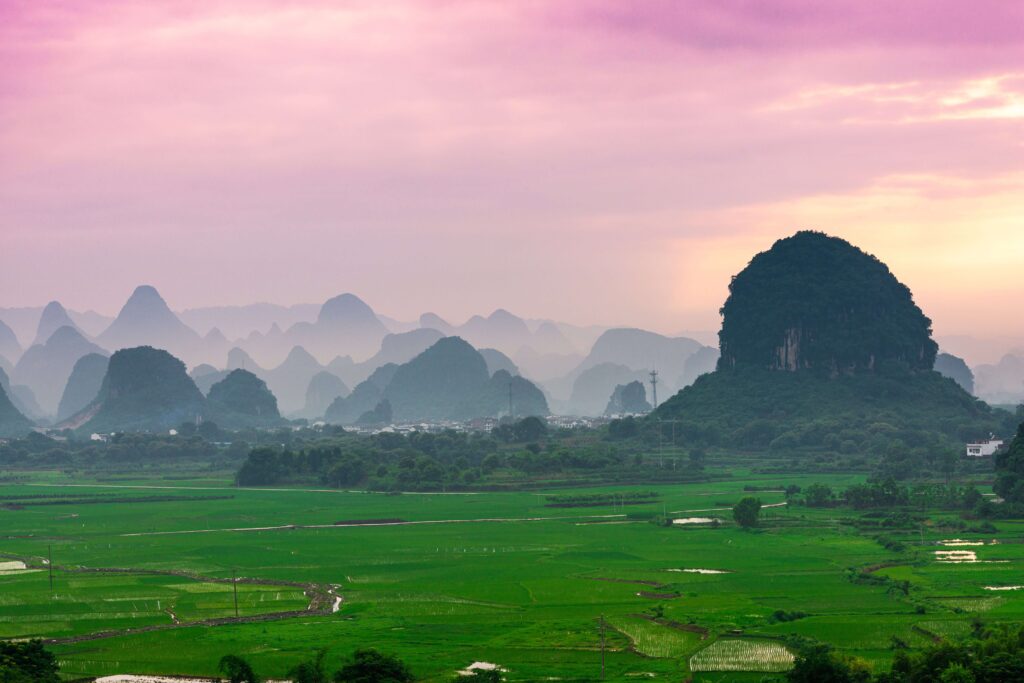
Most of the year, the weather is warm and humid. You can count on rain to come. There aren’t many times when the temperature is very high or very low. These conditions help plants grow thickly and keep water levels steady.
Changes in the seasons change the color and texture. In the spring, plants grow faster and water flows more. In the summer, the plants grow thick and the lines are softer. In the fall, the air gets drier and shapes become clearer. In the winter, leaves fall off and rocks are exposed.
In the early morning, fog is common. It goes up and down between peaks and valleys, making it harder to see distances. This effect makes the landscape look softer and connects things visually. Fog is a big part of how the area looks.
The weather affects how buildings are built and how land is used. Rainwater runs off roofs that are slanted. There is a small rise in the ground under houses. Instead of cutting through natural slopes, paths follow them.
The culture and environment of human settlement
Villages are built along rivers and at the foot of mountains. This position keeps settlements safe from the wind and direct sunlight. There are tightly packed groups of houses that make up small units.
The materials for building are local. Stone is used to build foundations. Walls and roofs are held up by wood. Clay tiles control the temperature and moisture. The height of buildings is limited to keep the landforms around them in balance.
Farming affects how people live every day. There are a lot of rice fields in flat areas. Terraces show up on slopes that aren’t too steep. The way people farm is old–fashioned and relies on hard work. The terrain makes mechanization hard.
Cultural practices follow the seasons. Planting and harvest seasons are when festivals happen. Food is made with things that are grown nearby. Craft traditions are based on the materials that are available and the needs of the people who use them.
Some important cultural traits are:
- Small village layout close to places where water can be found
- Traditional architecture that works in humid weather
- Agricultural systems that depend on the shape of the land
- Rituals that happen at certain times of the year and have to do with farming
Stability and protection of the environment
Low levels of industrial activity help keep the environment stable. The air quality is still good. Water systems don’t change much. Vegetation cover helps keep soil from eroding.
Local management is all about keeping things safe. There are rules for building expansion. Agricultural land is safe from being changed. The basics of waste management work well.
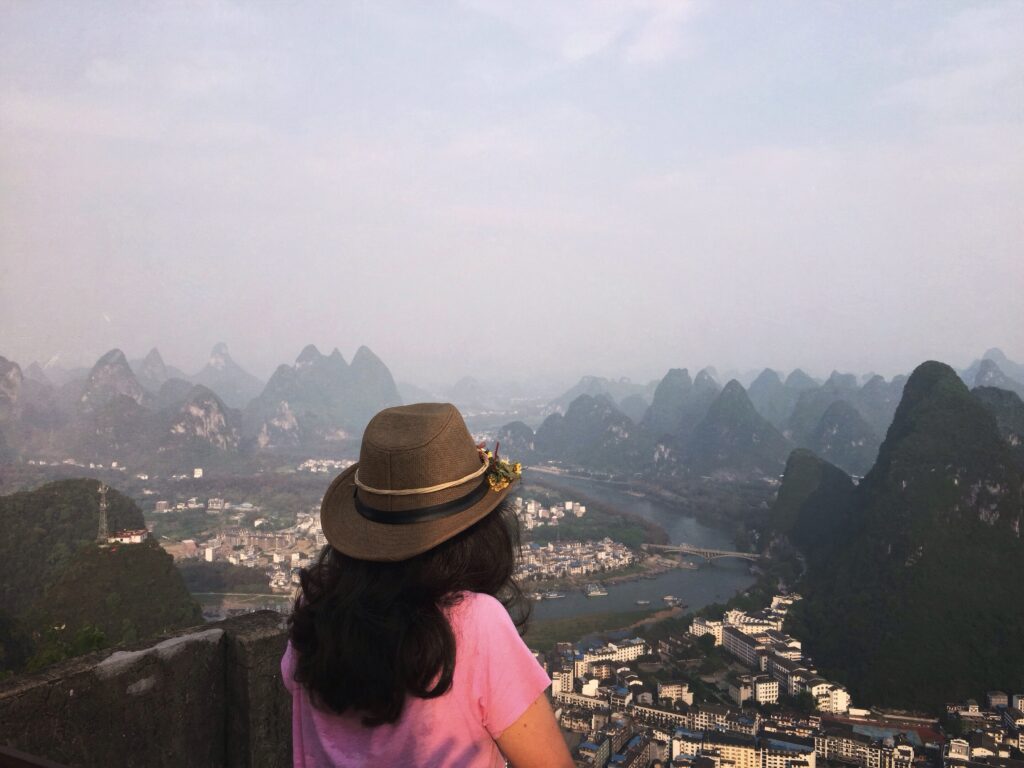
There is some tourism, but not a lot. People who come to visit tend to stay in certain areas. The main parts of the landscape stay the same. This separation helps ease the strain on natural systems.
Some of the most important things to care about in the environment are:
- Keeping the quality of water
- Limiting the density of construction
- Protection of land used for traditional farming
- Managing the flow of visitors
Part in studies of geography and culture
Researchers utilize this area as a case study for sustainable land utilization. The interplay among geology, water, and settlement yields long–term data.
Cultural studies emphasize continuity. The structure of society, language, and rituals stay the same. Cultural change was slow because of limited outside influence.
People also use the area for visual learning. It shows the traditional way that southern Chinese landscapes are built. Photographers and artists learn about light, fog, and how far away things are.
Educational materials talk about the area as a good example of how people can adapt to their environment without causing too much damage. The lack of big infrastructure shows other ways to develop.